Technical Diving - Equipment |
||||||
Custom Search
Its been remarked that in diving the snorkelers are the gazelles, the recreational divers are the horses and the tech divers are the elephants! While this is not totally accurate it gives an idea for the comparison. Equipment for technical diving tends to be complex in arrangement, heavy and requires total confidence and skill from the user to work effectively. A backup for almost every item is taken. In the event of an piece of gear failing the dive can be aborted without fuss and safely, as opposed to a hasty emergency procedure which often governs recreational diving. Much more scope for adjustment and customisation is the trend yet there is a standardisation to the rig (as tech gear is often referred to) so a tech diver from another land speaking a foreign language should in theory instantly know where what is in the event of he/she needing something from a team member whilst on the dive.
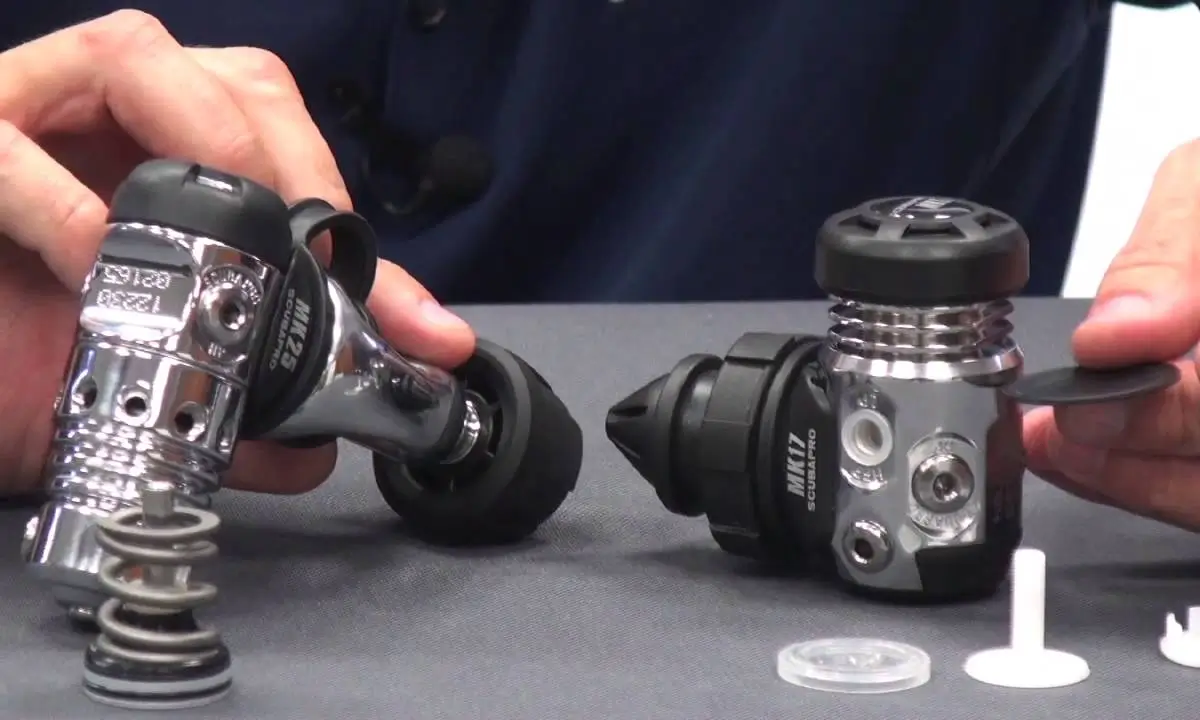
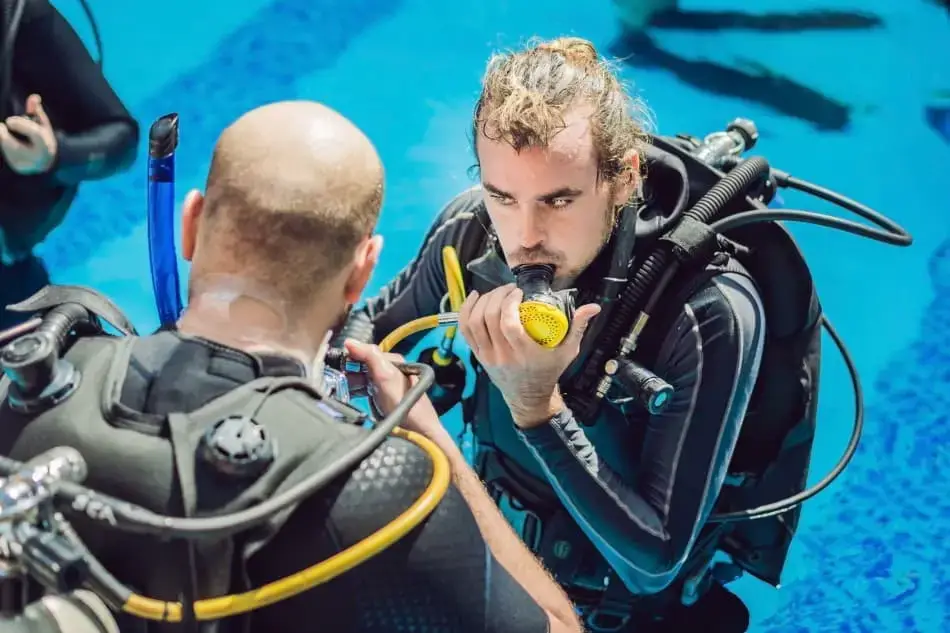
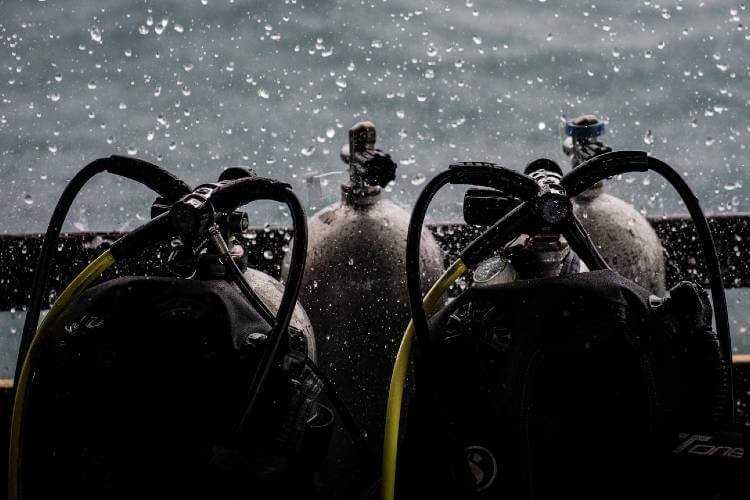
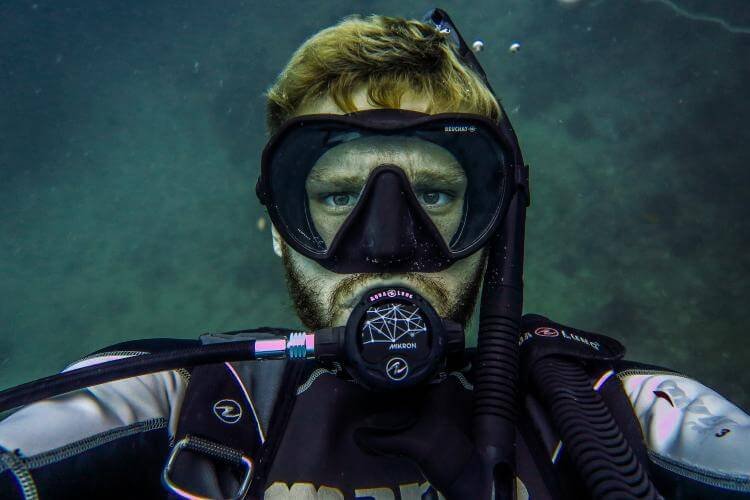
Technical Diving Regulator/DV The operation and look of regulators/DVs prefered by tech divers is similar to the recreational diver counter-part but with some marked preferences. Due to the deep depths involved and the colder water Tech divers prefer to dive with balanced diaphram type-environmentally sealed regulators. These are usually more expensive than conventional piston operated regulators but they are much less likely to free-flow. Having a balanced reg. allows the diver to breathe more easily at depth with the ambient pressure kept fully balanced throughout. A good example of one is pictured above and it features a side-stream exhaust, vital for keeping those pesky bubbles away! The 1st Stages should be DIN-type. These allow more pressure (300+ bar) and are much more secure than yoke type. The fine thread is a little tricky for some though! Especially on a cold rocky boat!
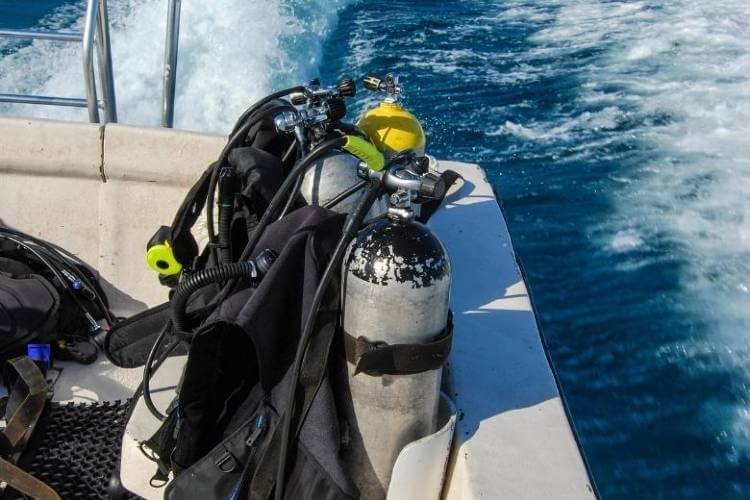
To complicate matters further cylinders can come in capacities ranging from 1.5 litres up to a mighty 18 litres! Typically in rec. diving 12 litre cylinders are the norm with the smaller cylinders used as a bail-out and the larger ones for deep/technical diving. As well as sizes cylinders come in two size catagories: Short or 'Stumpy' (pictured) or Long. Smaller people (5"7 and below) often prefer the shorter varient and vice versa. The cylinder itself is filled (via a compressor) with compressed air to between 200 and 300 bar. With such a great pressure only cylinders made for diving should be used. It is also necessary to have a visual inspection each year and a hydrostatic test every five (Regulations are subject to change). With good care and maintanence a cylinder should last for a life time.
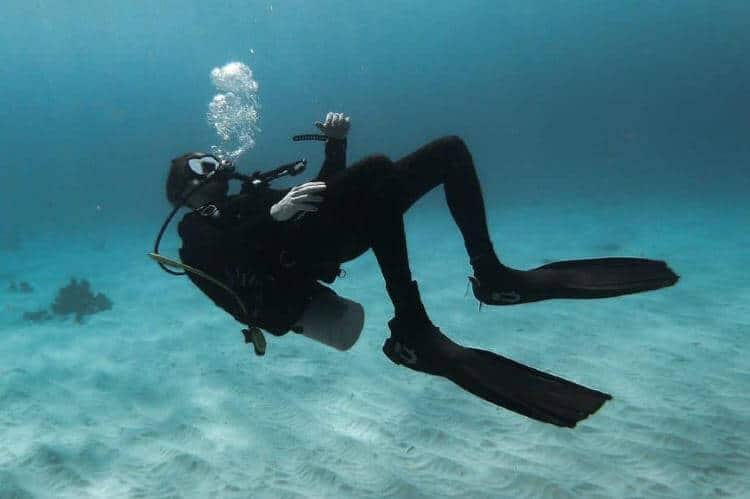
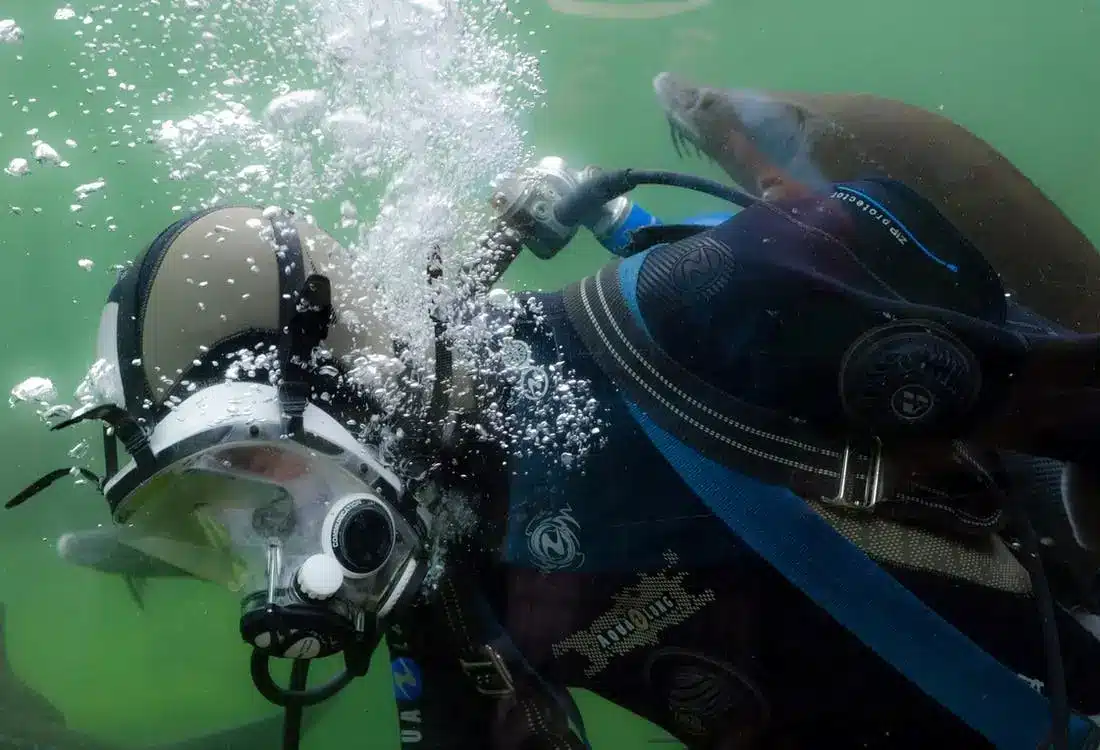
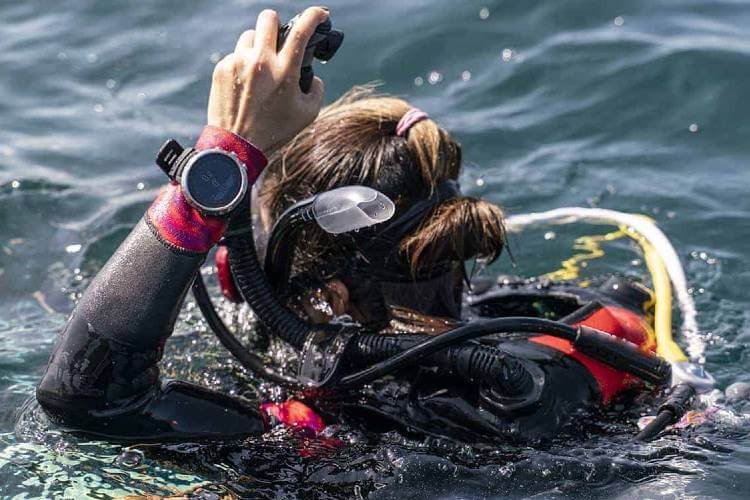
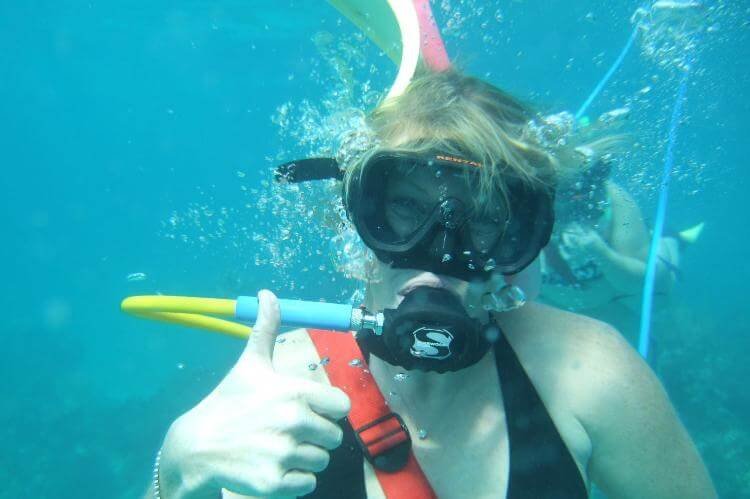
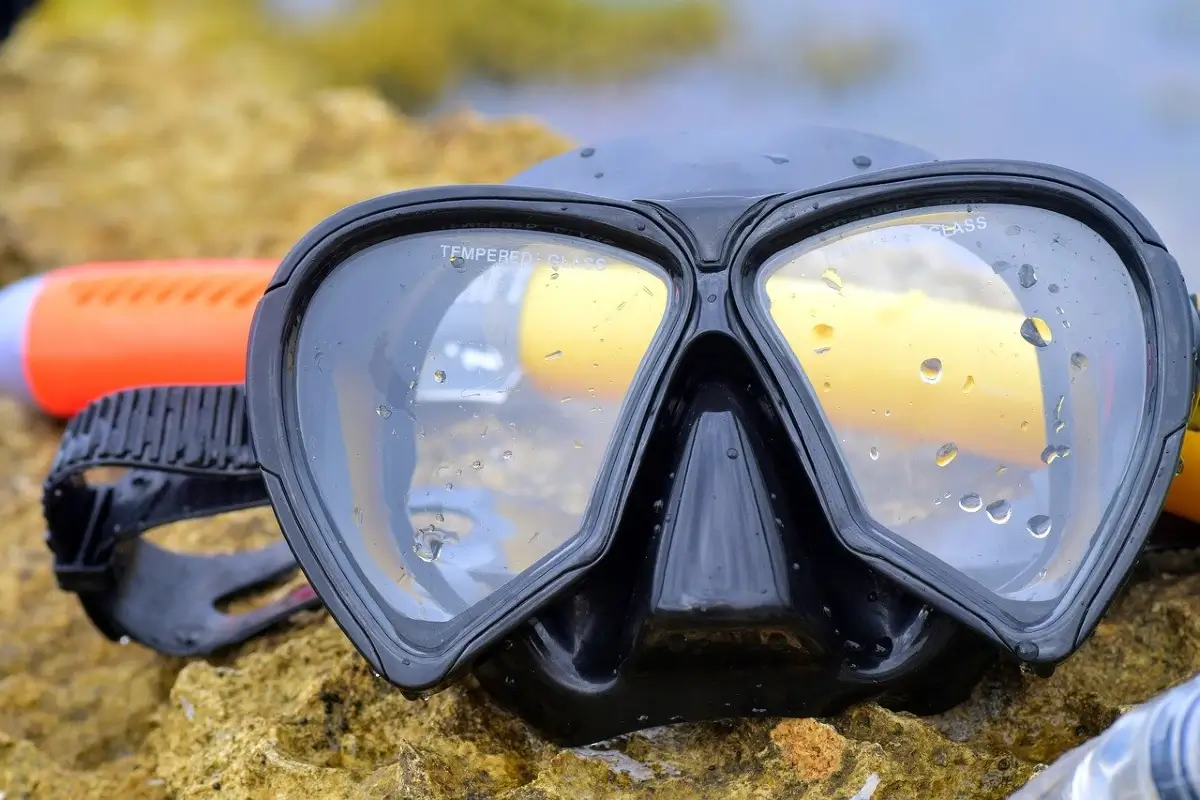
Essential for vision underwater. Without it we'd be almost blind on a dive. A good mask should seal effectively and not fall off the face when you lean forward (whilst gently inhaling through the nose). That test over the mask shouldn't leak underwater (unless your pull a face). Theres no real change in mask types or styles for tech diving. Although the full face dive mask/breathing reg. is gaining in popularity. The mask should be totally comfortable for longer periods than used to for recreational diving and above all else not cause any distractions via flapping straps, scratches etc. The often lambasted snorkel is redundant and is not used at all in tech diving, which may come as a suprise to some. Water conducts heat away from the body at a phenominal rate and even in the tropics where water temperatures can reach the mid 30s without thermal protection our bodies would soon suffer from the cold. The wetsuit is the most widely worn form of thermal protection. The wetsuit is made from synthetic rubber (neoprene) that has been foamed or expanded. Gas bubbles are trapped inside the neoprene are separated from each other which prevents the suit acting as a sponge and absorbing all the water. The material streches also allowing a good fit combined with effective insulation. Although Water is allowed to enter the wetsuit (via the neck,ankles, sleeves and stitching) the close-fit keeps heat loss to a minimum and the water trapped inside soon heats up to body temperature. A loose fitting wetsuit however permits water circulation to flow freely and greater chilling results. Wetsuits can come in a variety of thicknesses, some can be as thin as a tropical 1mm (called a skin suit) to as much as 9mm for the icy wastes. The pictured example is a one-piece wetsuit but others come in two or even three pieces. Often worn with the wetsuit (and drysuit) are gloves, bootees and hood. The latter is often underrated by some divers yet it is through the head that we loose 80% of body heat under water. Things to look out for on a wetsuit are reinforcement padding at the knees and elbows and spine pads for thickness and warmth. Specific to Tech diving though is that the increased time spent underwater and the deeper/colder depths that are encountered should see a 7mm wetsuit used as minimum, with additional layers underneath to insulate further from the cold. Advantages with a wetsuit: They are relatively inexpensive and are light-weight. A westsuit is easy to use and is comfortable. Scant maintenance is required. Disadvantages with a wetsuit: Due to the compression factor at depth it looses both buoyancy and insulation the deeper you go. Though the BCD can compensate for the loss of buoyancy, it cannot replace the insulation. On a second dive of the day getting into a soaking wetsuit on a cold day can be a real test of character! Originally the realm of Commercial, Salvage and Navy divers. The first drysuits were difficult to don and remove and had no air inside them resulting in a 'squeeze' at depth, the latter was overcame by adding air. With the advent of the water proof zip and numerous other improvements the drysuit 'came of age' and moved into the mainstream of sports diving. The crucial difference between the drysuit and the wetsuit is that no water enters (or should enter!) a drysuit. Insulation is provided by letting air in via the push-button chest valve where the LP pressure hose connects. Insulation is augmented also by the use of thermals. The foam-neoprene drysuit actually has two types: One that is loose, baggy and is intended to be worn with extra thermals underneath (commercial divers choice). The other is more tighter fitting and looks more like a wetsuit (prefered by sports divers). Extra quality is put into the stitching and seals allowing no water ingress when it is worn. With no water passing into the suit air has to added otherwise an uncomfortable (and sometimes painful) squeeze sets in (due to water pressure). Optional extras (for all types) can include hoods and dry gloves. Exhaust valves on all types tend to be on the upper arm and allow excess air to be vented (usually by a push-button operation). The membrane drysuit is similar in operation to the foam-neoprene but the difference is that the suit thickness tends to be thinner and it is usually a lot baggier. Insulation is by both air and thermals but the design allows an additional layer of air between the thermals and the skin, arguably giving it greater warmth than the foam neoprene drysuit. This style of drysuit is cheaper than the foam neoprene but the weak link comes in the seals which are often vulnerable to puncture. Due to the squeeze on a membrane being more noticeable (because of the thin membrane) buoyancy is easier to maintain and the squashed under garments return to their former shape. Advantages: The warmth factor; it cannot be overstated the morale and comfort the drysuit gives by sealing out the water over its wetsuit 'brother'. After the first dive on a chilly boat ride to the next you can guess who the divers keen to get back in the water are. The Protection; with the additional layers worn it takes a lot more to cut through a drysuit diver. Additional buoyancy; with the added air in the drysuit should your BCD fail you have a built-in back-up! Disadvantages: The price; drysuits are almost always more expensive than the wetsuit.
The Tech Divers choice of BCD is usually referred to as a 'Wing' or 'Wings' it ideally should have dual inflator hoses and should have a dual bladder for added safety. The main difference between a Tech BCD/Wings and those used in Recreational Diving is that the lift capacity is usually far greater and it frees up the area in front of the diver considerably. Apart from the cost, a possible downside is that they can have a tendency to put the unwary diver in a 'face-down' position and at the surface this is troublesome. Some like those 'Wings' pictured have bungees encircling them to reduce drag and speed-up deflation on the ascent. Other Tekkies prefer not to use them as they state that the bungees inhibit inflation.
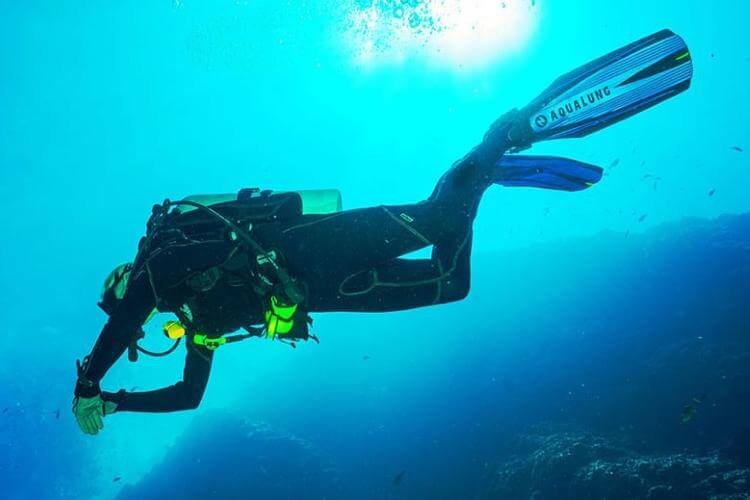
Often an overlooked factor but crucial to technical diving. Obviously the harness straps should be heavy duty material that is rot-resistant. There should be side and shoulder D-Rings to secure Stage/Deco cylinders. An Absence of pockets is a trend with the harness i'm afraid but this is necessary to keep the rig as 'clean' as possible. To get round this pouches can be fitted to them and/or thigh pockets sewn into the exposure suit. At the bottom of the back plate is where the lift bag is normally situated and stowed. It is also where the crotch strap is attached and is essential for securing the rig when u/w. (This is one of the most underated yet important items in Rec. BCD design). The back plate that secures to the Wing is normally of two types - Metal or synthetic padding. Metal is heavier, can aggravate the small of the back and transportation overseas is awkward. Its long lasting, a little cheaper and some say it supports the weight of the rig better. Synthetic padding however is lighter and more comfortable. The downside is it costs slightly more and is less robust. Perhaps the simplest in build and design but the most crucial to movement underwater. The source of many an hours debate amongst divers as to whose are the fastest, whose is the lightest and perhaps, whose is the coolest? Often wrongly referred to as 'flippers'. (DO NOT say this in front of other divers as it is the mark of the total new guy and uninformed). Two main types of fins: Full foot and open heel. Full foot fins are favoured by snorklers, swimmers, occasional warm water divers and free-divers. They are worn bare foot, slipped into akin to a close fitting shoe and are slightly lighter than the open heel variant. Open heel are almost always prefered and worn by scuba divers. Divers wearing these normally wear boots or bootees which are secured into the fin by a stout strap at the heel. These fins can accomodate a range of sizes, are often very comfortable and when out of the water the divers feet are protected somewhat by the boots. Both fin types can be obtained with 'Extras' built in. These include: Vented slots for reducing/channeling water resistance, split fins are useful for turning faster with little or no resistance (though they are reputed to be a liability in a current), Very rigid material 'blade' fins are o.k. under water, very good at the surface. Flexible strength material (excellent performance underwater, not so good at the surface). Technical dive computers are typically more sophisticated than recreational ones. Mixed gas dive computers allow more than one gas type carried to be equated into a decompression plan. Although more expensive than normal dive computers they are a real boon in aiding tech divers on the often complex deco schedules. Some of the most advanced mixed gas devices allow for emergency deco. plans to be computed on-the-fly by a tech diver in trouble or otherwise. The VR3 mixed gas computer (pictured left) is considered one of the finest of its calibre. Closed circuit rebreather divers often prefer this computer. Amoungst the many features O2 analysis and even recreational games are included for long and boring decompression stops. This can be the same as types used for recreational diving. For the deeper depths though a more powerful beam may be required. For this a torch with waterproof cord attached to an independant battery pack may be used. They are the best but can cost a small fortune! A pocket torch is carried too as a back-up if the primary torch fails.
A knife is no less important in tech diving. The trend tends to be short but sharp knives. A clever variation of the dive knife is the Z knife; an enclosed blade edge specficially designed for cutting netting and fishing line. Another is the dingy knife; This has no knife point to speak of but just a single edge. A type of small shears are even carried by some, as they are almost unmatched in cutting tough wire and line.
The hogarthian setup for tech divers allows a degree of standardisation to the tech divers rig. Its setup as follows: The two valves of the manifold are often designated Primary (right-hand valve) and Secondary (left- hand valve) and are treated as such with regard to the usage and destination of their repective hoses. The right and left-hand valves should be taken from facing the tech rig pictured. Two sets of regulator are connected to a both valves of a twin-sets manifold. SPG hose comes off primary valve over left shoulder and secured, long hose 2nd Stage Reg. comes off the left-hand valve passes under the left arm, under the dive reel, comes back around the neck and into the divers mouth. The short hose 2nd Stage Reg. comes off the right-hand valve and is secured via a bungee/surgical necklace (pictured) amd hangs from the neck. The neck Reg. is ideally situated here should another diver snatch out the long hose reg. in an emergency. The right-hand inflator is used as the primary method of bouyancy control, the left-hand one is tucked away for redundancy into the 'Wings' bungees or clips. The LP hoses designation are - primary inflator; left valve and secondary Inflator; right valve. So in effect both LP hoses cross each other at the manifold.
Overview | Training | Equipment | Mark Of The Tech Diver | The Next Step
|
||||||