Military Diving - Equipment |
|||
Equipment available to military divers is expensive, tough and hard to rival. Suppliers tend be specialists in design and manufacture. Comprehensive surface support usually available for combat/military divers as is recompression facilities. Almost all military diving equipment tends to be either black, dark coloured or camoflaged for concealment purposes. Breathing Unit
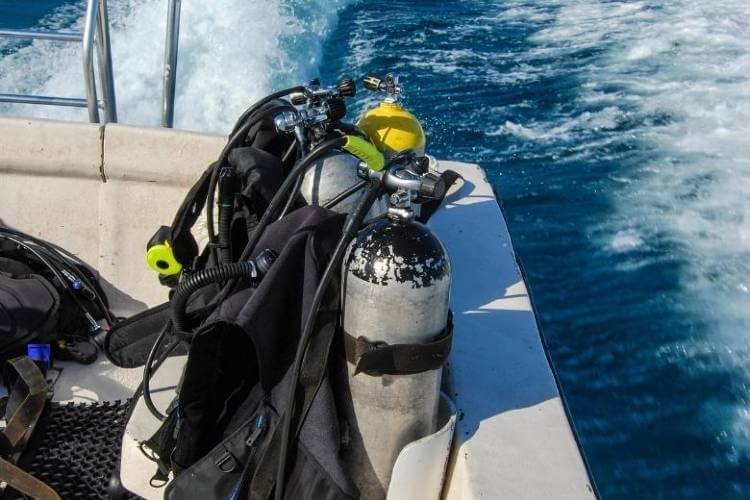
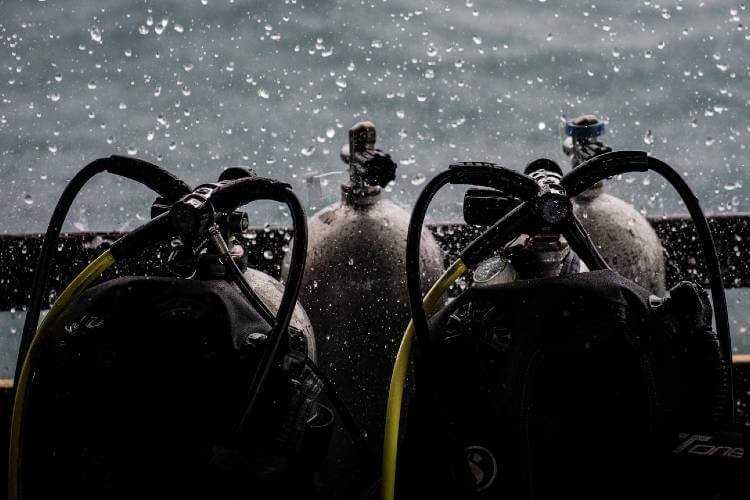
The Breathing equipment used by the military can vary depending on the mission. For routine work such as inspecting a ship or engineering applications open circuit aqualung similar to a scuba configuration is likely to be used.
When a mission calls for the utmost secrecy Closed-Circuit Rebreathers (CCRs) are used. Military CCRs are very sophisticated, complex and require in-depth training to be used safely. Whilst in operation exhaled breath is re-circulated into the CCR, 'cleaned' and allows no bubbles escape, thus ensuring its stealth capability. The gas blend of choice is normally pure oxygen as this incurs no decompression requirements and nitrogen fatigue. Two or more oxygen sensors are normally installed which monitor oxygen levels to ensure life support.
Helium blends are used but these tend to be in non-combat situations. Helium is usually used in deep recovery operations.
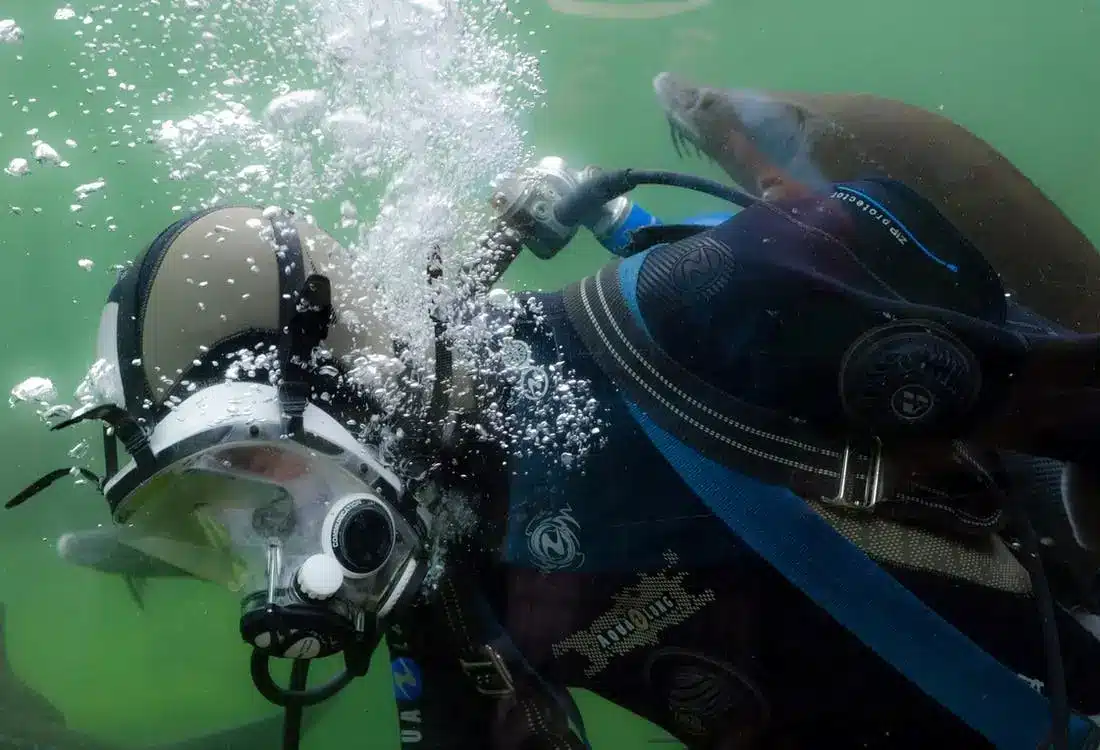
A full-face mask is almost always worn for communications with the support unit and to allow orinasal breathing. In the event of oxygen toxicity attack the diver is saved from drowning by the mask staying in place, as opposed to an ordinary regulator which is usually spat out during a CNS (Central Nervous System) convulsion.
Common rebreathers used by military divers include the IDA71; a Russian designed rebreather. It has about 4 hour’s duration underwater. Although some say the duration can be increased by ramming the void compartment with extra sodasorb and oxygen. This model is also seen on the civilian market as it is quite an old design. Insulation
Military drysuits differ a little from typical civilian ones. Most outwardly in the dark colour and ability to resist scrapes and bangs. A bailout bottle is found installed on some to be used in emergencies. Some drysuits are specific to what the situation calls for. An example of this being the 'foul water suit' which is entirely vulcanised and resistant to chemical ingress.
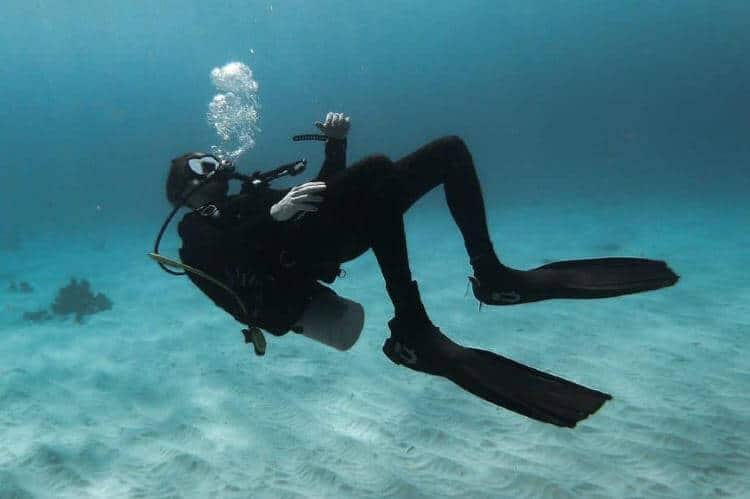
Fins
Weaponry
As expected on missions requiring incursions against a hostile force or where enemy divers are suspected a lethal weapon (s) is carried. The type carried can vary from army to army. Most types are an assault rifle or a sub-machine environmentally sealed for use under-water. Some are converted for use with fletchettes and harpoons ensuring lethality against hostile divers. The drawbacks of underwater projectives (usually steel rods or darts which are more accurate than cartridge ammunition) is that they are inaccurate and the barrels wear out rapidly quickly once out of the water.
Military DPV Strong currents and the need for urgency on operations are always a factor for combat diving ops. Though military divers have a high degree of fitness when a current exceeds 2 knots and the objective is at a long distance tiredness soon creeps in. The military DPV allows for effortless travel to and from an objective requiring covert entry. Performance is unrestrictive with speeds in excess of ten knots possible; these are the fastest known DPVs. Many different types and sizes are used that can transport up to four divers at once with equipment. The type pictured shares some similarities with the recreational DPV, both are neutrally buoyant and are usually man-portable. The similarities stop when it comes to speed and battery life though as these DPVs go faster and for longer than the civilian models.
Military SDV
Military DPVs/SDVs are currently unavailable to the civilian market for security reasons. An example of this is the British designed and built Sub-Skimmer vehicle. To this day its price is too expensive for any scuba club to consider buying. As time passes and new technology becomes available the civilian sector may start to see the older DPVs become available. Trained Aquatic Animals
Ever since the 1960s their has been a secretive training program involving training sea creatures intelligent and smart enough to follow commands and orders. Mine clearance, early warning detection of threats and even elimination of hostile frogmen are what dolphins and possible sea lions are capable of targetting. Mine Clearance System
In-Water Communications
History | Training | Equipment
|